

Extending our impact in organ support
Building on our nearly 30 years of expertise in therapies used in the ICU, we have advanced critical care therapies with systems capable of supporting both the kidney and other organs. Using a single system, clinicians can simultaneously deliver therapies to treat such conditions as acute kidney injury, sepsis and acute respiratory distress syndrome. The system can also deliver standalone therapy to treat autoimmune disorders.
Critical illness
Multiple organ dysfunction can affect ~25% of critically ill patients,1 contributing to ~50% of deaths in the intensive care unit (ICU).2,3
COVID-19
COVID-19 can result in multi-organ dysfunction,4,5 and patients with COVID-19 in the ICU commonly require support for different organ systems.5
Acute kidney injury
AKI has been reported in ~30% of patients hospitalised with COVID-19.6 AKI complicated the course of ~45% of patients requiring ICU care, and 1 in 5 patients admitted to the ICU received renal replacement therapy (RRT).6

90% of HCPs said using a single system for multi-organ dysfunction would drive efficiencies for their hospital system9
For patients with multiple organ dysfunction:
- Using a single device helps reduce complexity in an already complex environment.10,11
- The integrated Vantive acute therapies portfolio expands treatment possibilities beyond CRRT, including haemoperfusion, blood purification for sepsis management, extracorporeal CO2 removal (ECCO2R) and therapeutic plasma exchange (TPE).
- Delivery of CRRT and other organ support therapies is possible with the PrisMax 2, PrisMax and Prismaflex systems, enabling personalised treatment through a single vascular access.12

Extracorporeal CO2 removal
Support management of acute respiratory dysfunction with ECCO2R.

Blood purification
Remove inflammatory mediators, endotoxin, fluid and uremic toxins simultaneously.
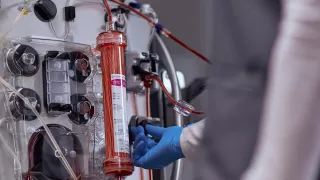
Therapeutic plasma exchange
Remove diseased blood components to treat Guillain-Barré syndrome, thrombotic thrombocytopenic purpura, myasthenia gravis and Goodpasture syndrome.
Partnering for improved patient care
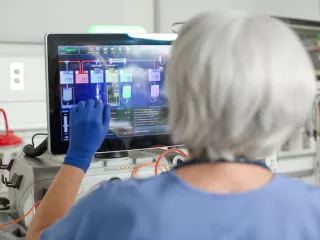
Vantive partners with clinicians to identify opportunities to simplify complexity, enable efficiencies and improve patient outcomes for the most critically ill. Visit our Vantive Learning Services on-demand learning hub to access information and training in providing multi-organ support therapies for patients.
Important Safety Information
Country to provide local important safety information if required
CE 0123
CE 2797
Vantive, Prismaflex and PrisMax are trademarks of Vantive Health LLC or its affiliates.
References
-
Vincent JL, Sakr Y, Sprung CL, et al. Sepsis in European intensive care units: results of the SOAP study. Crit Care Med. 2006;34(2):344-353.
-
Mayr VD, Dünser MW, Greil V, et al. Causes of death and determinants of outcome in critically ill patients. Crit Care. 2006;10(6):R154.
-
Orban JC, Walrave Y, Mongardon N, et al. Causes and characteristics of death in intensive care units: a prospective multicenter study. Anesthesiology. 2017; 126(5):882-889.
-
Wadman M, Couzin-Frankel J, Kaiser J, Matacic C. Science. 2020. Accessed November 2021. Available at: https://www.sciencemag.org/news/2020/04/how-does-coronavirus-kill-clinicians-trace-ferocious-rampage-through-body-brain-toes.
-
Intensive Care National Audit & Research Centre. ICNARC report on COVID-19 in critical care. September 7, 2020. Accessed November 2021. Available at: https://www.icnarc.org/Our-Audit/Audits/Cmp/Reports.
-
Silver SA, Beaubien-Souligny W, Shah PS, et al. The prevalence of acute kidney injury in patients hospitalized with COVID-19 infection: a systematic review and meta-analysis. Kidney Med. 2021;3(1):83-98.e1.
-
Maslove DM, Lamontagne F, Marshall JC, Heyland DK. A path to precision in the ICU. Crit Care. 2017;21(1):79.
-
Ronco C, Ricci Z, Husain-Syed F. From multiple organ support therapy to extracorporeal organ support in critically ill patients. Blood Purif. 2019;48(2):99-105.
-
GLG Group. Prismaflex and Prismax Value Message Testing Market Research; 2021.
-
Takala J. Past and present challenges in ICU management. ICU Management. 2012;12(1):41-42.
-
Pierce LNB. Patient safety and production pressure: ICU nursing perspective. APSF Newsletter. Spring 2001.
-
Vantive Health LLC. PrisMax Operator’s Manual. March 2021.
-
Jiang DH, McCoy RG. Planning for the post-COVID syndrome: how payers can mitigate long-term complications of the pandemic. J Gen Intern Med. 2020;35,3036-3039.
-
Zimmerman JL. What is the future of ICUs? Qatar Med J. 2019;2019(2):46.
-
Khullar D, Bond AM, Schpero WL. COVID-19 and the financial health of US hospitals. JAMA. 2020;323(21):2127-2128.
-
Vincent JL, Creteur J. Critical care medicine in 2050: Less invasive, more connected, and personalized. J Thorac Dis. 2019;11(1):335-338.
-
World Health Organization. Increasing complexity of medical technology and consequences for training and outcome of care. Background Paper 4. August 2010.