

Sharesource
Remote Patient Management
Enhancing APD programs with Sharesource
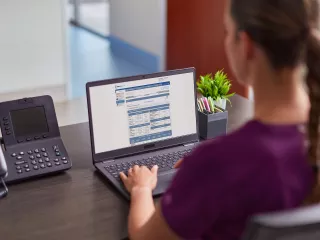
Sharesource is a two-way remote patient management (RPM) platform that enables healthcare professionals to securely view and act upon APD patients' treatment data, including adjusting patients' device programs without an additional trip to the clinic.1
With over 60 million treatments delivered globally, including 20 million in the U.S., the Sharesource is the most evidenced remote PD patient management technology available.2
Personalized care
Sharesource provides the treatment data healthcare professionals need to review and, if necessary, use to adjust treatment, in order to personalize their patients’ therapy remotely and with confidence.
A growing body of evidence shows that Sharesource may help reduce patient complications3,4 and hospitalizations5-7 and promote treatment adherence8,9 — with the goal of improving patient outcomes and clinic resource optimization.
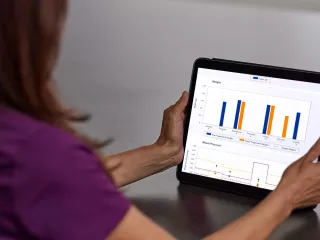
*Image does not depict real patient data.
Making informed decisions
With on-demand access to historical treatment data, Sharesource can help clinicians make informed treatment decisions for patients.
Improving patient compliance
The Sharesource Clinical Dashboard indicates when a patient stops a treatment early or skips a treatment altogether. This may help identify and resolve compliance issues with prescribed treatments.
Increasing clinic efficiencies
Tracking treatment data in Sharesource for multiple patients offers the potential to improve clinic efficiencies by enabling prioritization of resources.
Implementation that is simple by design
Vantive provides the modem for patient devices, and Sharesource utilizes cloud-based technology, so there is little-to-no IT investment required.
Transparent patient adherence8
Establishes transparency to patient adherence patterns and may facilitate early intervention.
Proactive patient management10
Enables clinicians to spend a greater proportion of time on proactive patient care.
Improved fluid management11
With Sharesource, remote management of patients is ensured, and patients are actively kept in treatment. As a result, ultrafiltration and dialysis efficiency of patients increase with improved treatment adherence, and blood pressure regulation can be achieved with fewer antihypertensive drugs.
Reduction in hospitalisation5
The remote monitoring technology specifically designed to be integrated into APD systems gives both patients and their clinical teams a powerful tool that can enhance communication, potentially improve adherence to treatment, and provide the potential for early intervention of complications of therapy.
Reduction in drop-out12
Retrospective, multicenter, observational cohort study of 558 prevalent adult APD patients demonstrated a lower drop-out rate in the APD-RPM cohort versus the APD cohort.
Increased time on therapy13
Retrospective, observational, multicenter, cohort study of 574 incident patients undergoing APD (propensity matched) demonstrated that APD patients with RPM remained on PD 3.2 months longer than those without RPM.
Reduction in resource utilisation14
A simulated study that estimates the potential impact of RPM on APD patients’ use of healthcare resources and costs in the US, Germany and Italy.
Reduction of Costs & Resources15
Sharesource reduces costs and resources: There was a statistically significant reduction in the number of in-person visits required by patients, leading to a statistically significant reduction in the costly time spent by physicians and nurses during
each inpatient visit.
Reduction of Costs & Resources16
Remote monitoring in chronic disease management may significantly improve an individual’s quality of life, allowing patients to maintain independence and avoid complications. Remote monitoring technology has the potential to reduce clinic appointments, monitor patients more efficiently, allow timely changes to patient care, reduce travel burden on the patients attending clinic, increase access to care and decrease healthcare delivery costs.
Patient Management & Efficiency15
The Sharesource may help improve patient management and efficiency: Establishing remote patient management (RPM) in 3 UK hospitals has allowed PD nurses to spend 35% more time on proactive tasks, improving patient management and efficiency.
Important Safety Information
For the safe and proper use of the products mentioned herein, please refer to the appropriate Instructions for Use or the appropriate Operator's Manual
Intended Use
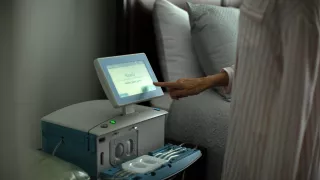
The Amia Automated PD System is intended for automatic control of dialysate solution exchanges in the treatment of adult renal failure patients undergoing peritoneal dialysis. All therapies using the Amia Automated PD System must be prescribed and performed under the responsibility of a physician who is familiar and well-informed about peritoneal dialysis.
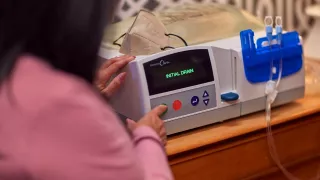
Homechoice Claria APD system is intended for automatic control of dialysis solution exchanges in the treatment of pediatric and adult renal failure patients undergoing peritoneal dialysis in the home healthcare environment including comparable use in professional healthcare facilities.
The Sharesource portal is intended for use by healthcare professionals to remotely communicate with compatible dialysis instruments and transfer data to a central database to aid in the review, analysis, and evaluation of patients’ historical treatment results. This system is not intended to be a substitute for good clinical management practices nor does its operation create decisions or treatment pathways.
Vantive, Amia, Homechoice, Homechoice Claria and Sharesource are trademarks of Vantive Health LLC or its affiliates.
References
-
Vantive Health LLC. Amia Automated PD System Clinical Guide.
-
Vantive Health LLC. Sharesource Global Treatment Data. Accessed September 2023.
-
Gomez R, et al. Abstract P222 presented at: 13th Euro-PD congress. 2017. Dublin, Ireland.
-
Rojas-Diaz M, Ramos A. Help of remote patient monitoring in the assessment of changes in ultrafiltration before, during, and after a peritonitis episode in patients on automated peritoneal dialysis. Abstract TH-PO859 presented at: ASN Kidney Week; Oct. 31-Nov. 5, 2017; New Orleans, LA, U.S. 2017.
-
Sanabria M, Buitrago G, Lindholm B, et al. Remote patient monitoring program in automated peritoneal dialysis: impact on hospitalizations. Perit Dial Int. 2019;39(5):472-478.
-
Uchiyama K, Washida N, Yube N, et al. The impact of a remote monitoring system of healthcare resource consumption in patients on automated peritoneal dialysis (APD): a simulation study. Clin Nephrol. 2018;90(5):334-340.
-
Laplante S, Mcleod K, Danek J, et al. Remote monitoring of patients on automated peritoneal dialysis saves healthcare resources in a simulation study. Abstract SA-PO483 presented at: ASN Kidney Week; Nov. 15-20, 2016; Chicago, IL, U.S.
-
Firanek C, Salas M, Gellens M, et al. MP557 Discrepancy between prescribed and actual APD prescription delivery: Identification using cycler remote management technology. Neph Dial Trans. 2017;32(suppl 3):iii633.
-
Jotterand Drepper V, Martin, PY, Stoermann Chopard C, et al. Remote patient management in automated peritoneal dialysis: a promising new tool. Perit Dial Int. 2018;38:76-78.
-
Wood E, McCarthy K, Roper M. Remote monitoring of peritoneal dialysis: evaluating the impact of the Claria Sharesource system. J. Kidney Care. 2019;4(1):16-24.
-
Yeter H, Akcay OF, Ronco C, Derici U. Automated remote monitoring for peritoneal dialysis and its impact on blood pressure. Cardiorenal Med. 2020;10(3):198-208.
-
Corzo L, Vesga J, Sanabria M, Rivera A. Clinical outcomes in remote patient monitoring program in automated peritoneal dialysis: a Colombian experience. Neph Dial Trans. 2018;35(3):1151.
-
Sanabria M, Vesga J, Lindholm B, Rivera A, Rutherford P. Time on therapy of automated peritoneal dialysis with and without remote patient monitoring: a cohort study. Int J Nephrol. 2022;2022:8646775.
-
Makhija D, Alscher MD, Becker S, et al. Remote monitoring of apd patients: assessing clinical and economic value. Telemed J E Health. 2018;24(4):315-323.
-
Firanek C et al, SP508 Impact of remote patient management in hospitals conducting APD: Shifting the nursing care paradigm Neph Dial Trans 2017; 32 (suppl 3): iii300
-
Remote Patient Monitoring in Peritoneal Dialysis (PD): Evaluating the benefits of implementation on Service resource. Teresa Patterson Peritoneal Dialysis Unit Manager, Gloucester Royal Hospital. EuroPD 2017.