

Expanding to Multi-Organ Support
Expand treatment possibilities for your patients by delivering single or combined multi-organ support therapies simultaneously on one device

Multi-organ dysfunction is common in the ICU and can affect ~25–30% of critically ill patients.5, 6 Deliver multiple therapies simultaneously using a single vascular access
Management of multi-organ dysfunction is complex, requiring an integrated approach of pharmacologic and organ support therapies to both support individual organs and manage the effects of organ crosstalk.7 Clinicians can provide multi-organ support therapies using a single vascular access, helping to minimize the invasiveness of treatment8 and reduce the risk of infection for patients with multi-organ dysfunction.9-11 Furthermore, 90% of healthcare professionals have said that using a single system for multi-organ dysfunction would drive efficiencies for their hospital system.12
Simplify
Using a single device helps reduce complexity in an already complex environment.13,14
Expand
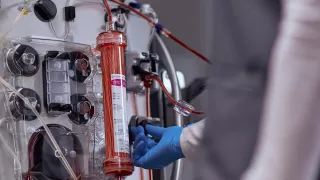
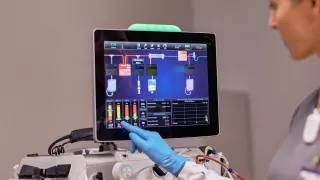
The integrated Vantive acute therapies portfolio expands treatment possibilities for patients with multi-organ dysfunction, helping clinicians to provide quality care.
Personalize
Simultaneous delivery of CRRT and other organ support therapies is possible with PrisMax 2, PrisMax and Prismaflex systems, enabling personalized treatment through a single vascular access.15,16




Important Safety Information
PrisMax
- The PrisMax control unit is intended for:
Continuous Renal Replacement Therapy (CRRT) for patients with acute renal failure and/or fluid overload. - Therapeutic Plasma Exchange (TPE) therapy for patients with diseases where removal of plasma components is indicated.
- Hemoperfusion(HP) for patients with conditions where immediate removal of substances by adsorption is indicated.
All treatments administered via the PrisMax control unit must be prescribed by a physician.
WARNING!
Use only fluids designed for intravenous operations and are approved for CRRT/TPE/HP usage. Do not use fluids intended for any other usage like enteral feedings/lipids or cytotoxic drugs.
CONTRAINDICATIONS
There are no known absolute contraindications to Continuous Renal Replacement Therapies.
There are no known contraindications to Therapeutic Plasma Exchange.
There are no known contraindications to Hemoperfusion.
Regional Citrate Anticoagulation is contraindicated in patients with severe liver failure and shock with muscle hypoperfusion.
For the following conditions a careful assessment of the individual risk/benefit ratio has to be made by the treating physician (relative contraindications).
- Inability to establish vascular access.
- Severe hemodynamic instability.
- Known hypersensitivity to any component of the Prismaflex disposable set.
TPE Sets
The Prismaflex TPE1000/TPE2000 set is indicated for use only with the PrismaFlex control unit or with the PrisMax control unit (in countries where PrisMax is cleared or registered), after having selected TPE therapy (therapeutic plasma exchange).
The Prismaflex TPE1000/TPE2000 set is intended for use in therapeutic plasma exchange, thus in diseases where removal of plasma components in indicated.
The use of the Prismaflex TPE1000 set should be restricted to patients with a body weight greater than 9kgs (20lbs).
The use of the Prismaflex TPE2000 set should be restricted to adults.
The size, weight, state of uremia, cardiac status and general physical condition of the patient must be evaluated by the prescribing physician before each treatment.
The device should be used only on the direction of a physician who has evaluated all of the pertinent features of this device in relation to the individual patient. Patients with bleeding tendencies must be closely supervised during the treatment.
Treatment should be discontinued if acute hemorrhage that can not be corrected (hematemesis, hemoptysis and melena) occurs during TPE.
All treatments administered via the Prismaflex set must be prescribed by a physician.
Oxiris
Intended Purpose
The oXiris set is a single use device that provides blood purification via diffusion, convection and adsorption through a semipermeable membrane.
The oXiris set is for use only in conjunction with the PrismaFlex control unit or with the PrisMax control unit (in countries where PrisMax is cleared or registered).
All treatments administered with the oXiris set must be prescribed by a physician. The size, weight, state of uremia, cardiac status, and general physical condition of the patient must be carefully evaluated by the prescribing physician before each treatment.
Indications
The oXiris set is indicated for use in critically ill patients with a body weight equal or greater than 30 kg (66lb) for hemoperfusion and / or renal replacement modalities such as:
- Slow Continuous UltraFiltration (SCUF)
- Continuous Veno-Venous Hemofiltration (CVVH)
- Continuous Veno-Venous HemoDialysis (CVVHD)
- Continuous Veno-Venous HemoDiaFiltration (CVVHDF)
When used for hemoperfusion only, the SCUF mode shall be used with no fluid removal prescription, as the indication is to reduce elevated levels of inflammatory mediators, such as cytokines, and to reduce endotoxins.
If patients suffer from acute kidney injury and / or volume overload, the oXiris set is indicated for continuous renal replacement therapies (CRRT), to perform fluid management and removal of uremic toxins. The removal of inflammatory mediators and endotoxins is performed simultaneously when indicated for CRRT.
Contraindications
It is contra-indicated to use the oXiris set where patients present a known allergy to heparin or have type II thrombocytopenia caused by heparin (HIT Syndrome type II).
Any contra-indications indicated in the respective Instructions for use of all drugs used simultaneously with this set should be taken into account.
For the following conditions a careful assessment of the individual risk/benefit ratio has to be made by the treating physician (relative contraindications):
- inability to establish vascular access,
- severe hemodynamic instability, known hypersensitivity to any component of the oXiris set.
PRISMAFLEX
Intended use
The PRISMAFLEX control unit is intended for:
- Continuous Renal Replacement Therapy for patients with acute renal failure and/or fluid overload.
- Therapeutic Plasma Exchange Therapy for patients with diseases where removal of plasma components is indicated.
- Hemoperfusion for patients with conditions where immediate removal of substances by adsorption is indicated.
All treatments administered via the PRISMAFLEX control unit must be prescribed by a physician.
Contraindications
There are no known contraindications to Continuous Renal Replacemen Therapies.
There are no known contraindications to Therapeutic Plasma Exchange.
There are no known contraindications to Hemoperfusion.
For contraindications that may apply to the disposable set selected for the therapy, refer to the Instructions For Use of the disposable set.
For safe and proper use of the devices, please refer to the Instructions for Use.
CE 0123
CE 2797
Vantive, Oxiris and PrisMax are trademarks of Vantive Health LLC or its affiliates.
References
-
Marshall JC. The multiple organ dysfunction syndrome. In Surgical Treatment: Evidence-Based and Problem Orientated. 2001. Accessed November 2021. Available at: https://www.ncbi.nlm.nih.gov/books/NBK6868/.
-
Batlle D, Soler MJ, Sparks MA, et al. Acute kidney injury in COVID-19: emerging evidence of a distinct pathophysiology. J Am Soc Nephrol. 2020;31(7):1380-1383.
-
Ronco C, Reis T, Husain-Syed F. Management of acute kidney injury in patients with COVID-19. Lancet Respir Med. 2020;8:738-742.
-
Husain-Syed F, Slutsky AS, Ronco C. Lung-kidney cross-talk in the critically ill patient. Am J Respir Crit Care Med. 2016;194(4):402-414.
-
Vincent JL, Sakr Y, Sprung CL, et al. Sepsis in European intensive care units: results of the SOAP study. Crit Care Med. 2006;34(2):344-353.
-
Vincent JL, Lefrant JY, Kotfis K, et al. Comparison of European ICU patients in 2012 (ICON) versus 2002 (SOAP). Int Care Med. 2018;44(3):337-344.
-
Ronco C, Ricci Z, Husain-Syed F. From multiple organ support therapy to extracorporeal organ support in critically ill patients. Blood Purif. 2019;48(2):99-105.
-
Consales G, Zamidei L, Turani F, et al. Combined renal-pulmonary extracorporeal support with low blood flow techniques: a retrospective observational study (CICERO Study). Blood Purif. 2022;51(4):299-308.
-
Joint Commission. Central line-associated bloodstream infections toolkit and monograph. Available at: https://www.jointcommission.org/-/media/tjc/documents/resources/hai/clabsi_monographpdf.pdf (accessed November 2021).
-
Dube WC, Jacob JT, Zheng Z, et al. Comparison of rates of central line-associated bloodstream infections in patients with 1 vs 2 central venous catheters. JAMA Netw Open. 2020;3(3):e200396.
-
Concannon C, van Wijngaarden E, Stevens V, Dumyati G. The effect of multiple concurrent central venous catheters on central line-associated bloodstream infections. Infect Control Hosp Epidemiol. 2014;35(9):1140-1146.
-
GLG Group. Prismaflex and Prismax Value Message Testing Market Research; 2021.
-
Takala J. Past and present challenges in ICU management. ICU Management. 2012;12(1):41-42.
-
Pierce LNB. Patient safety and production pressure: ICU nursing perspective. APSF Newsletter. Spring 2001.
-
PrisMax Operator’s Manual. March 2021.
-
Prismaflex Operator’s Manual. 2015.